“Programs like this matter because they give us strength,” Rupa explains. “They let us be seen for who we are, not for our disabilities.”
In the heart of Phuentsholing, a small group of six individuals gathers every week with one shared purpose, to create, to support each other, and to show the world that disability does not define them. This is the Gakid Phenday Group, a community of persons with disabilities who have turned their shared struggles into a source of strength.
Their journey began in December 2023, after a training organized by RENEW and FITA. Among the founding members is Rupa Kafley, the group’s coordinator, whose quiet resilience has inspired the team to rise above the stigma they face daily.
“For most people, we are not called by our names,” Rupa shares softly. “They call me ‘paralyzed,’ not Rupa. Others in our group are called names like Tsagay (dumb) or Kam Zhawo (cripple). Our abilities are invisible to them,they only see our disabilities.”
Life for persons with disabilities in their community is filled with economic, social, and emotional barriers. Many of them are unable to secure proper jobs, and when they do work, their efforts often go unrecognized or unpaid. People assume they cannot defend themselves, making them vulnerable to mistreatment. These experiences, while painful, became the foundation of their resolve to come together and create something meaningful.
The Gakid Phenday Group is not just about making handicrafts—it is about reclaiming identity, dignity, and joy. “Though we have our disabilities, we still have our talents,” Rupa says with a gentle smile. “Jigme loves to sing; some love to dance. We laugh together, share our feelings, and remind ourselves that we are human first.”
From an initial 11 members, the group now has six. They have lost one member and seen two others move on to jobs, a bittersweet reminder of both their challenges and their hopes for independence. The group currently works from a space provided by RENEW and receives occasional support from the Thromde, though accessibility remains a challenge.
Their dream is to grow—not just as artisans, but as a movement of empowerment. They envision opening a small museum in southern Bhutan to showcase their handcrafted products, and they hope to learn new skills such as advanced packaging to make their creations more marketable.
“Programs like this matter because they give us strength,” Rupa explains. “They let us be seen for who we are, not for our disabilities.”
Every product crafted by the Gakid Phenday Group is more than an item for sale—it is a story of courage, resilience, and the simple, profound desire to live with dignity. Supporting their work is supporting their voices, their dreams, and their hope for a more inclusive Bhutan.
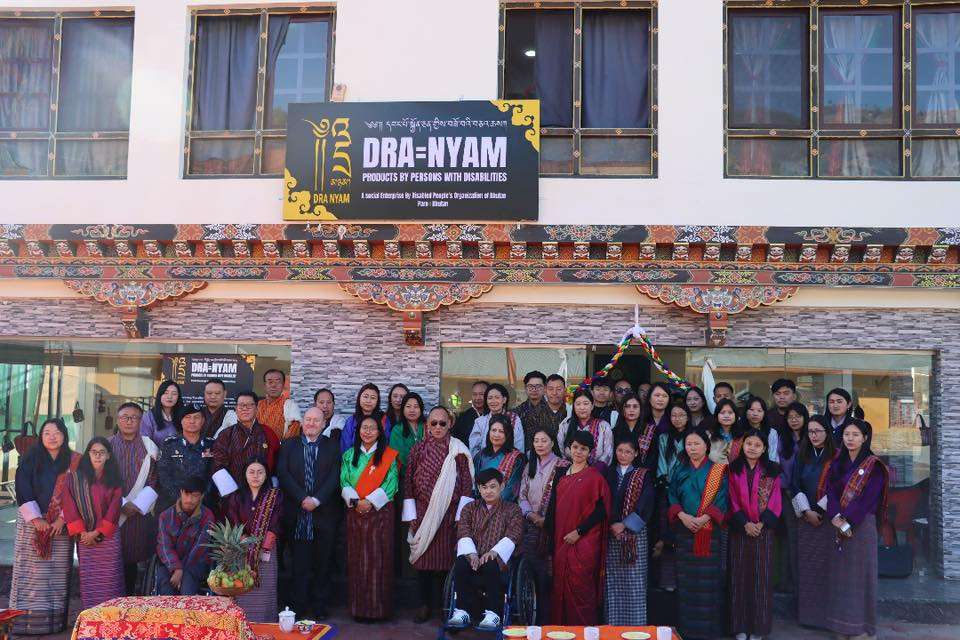
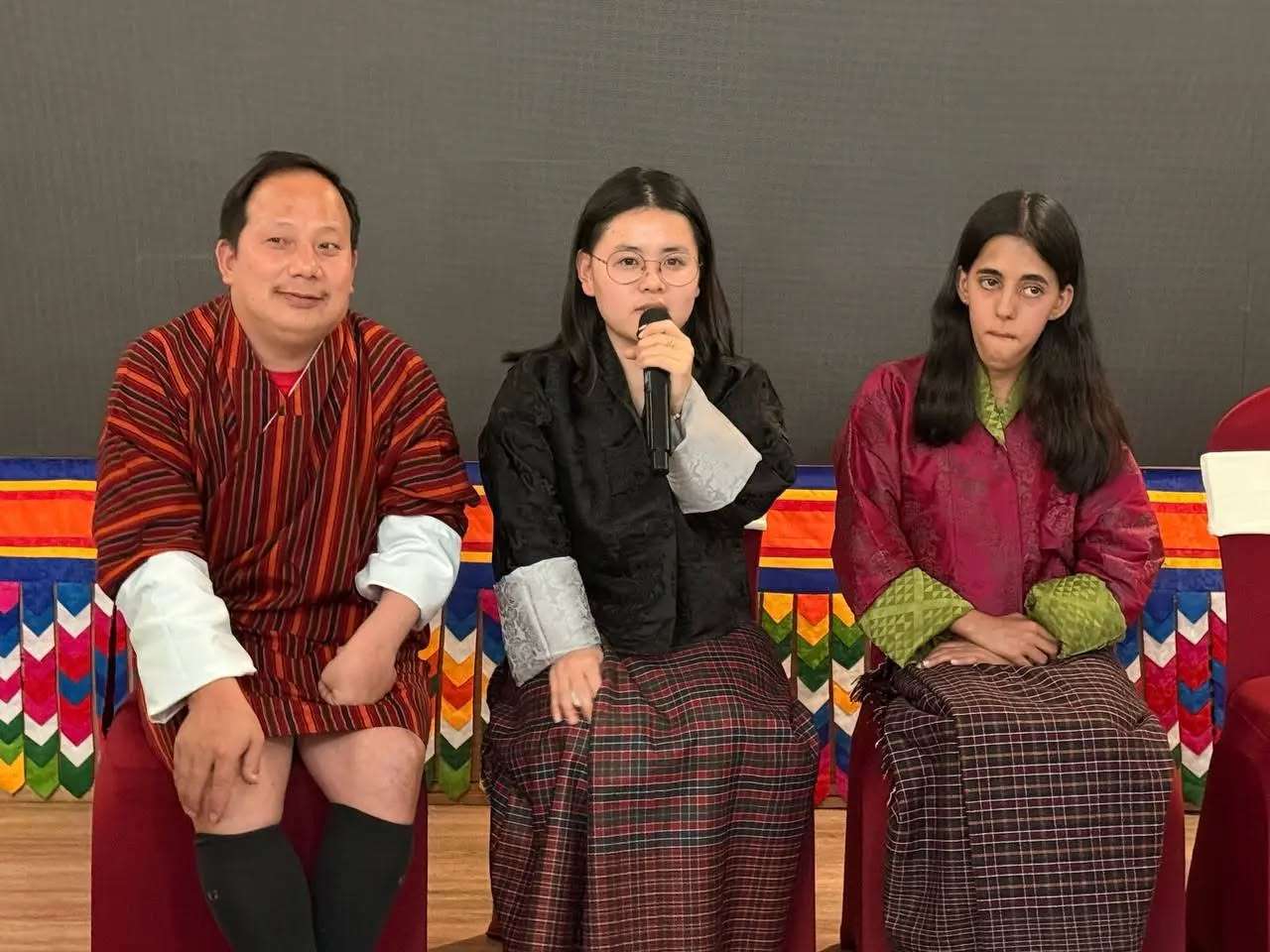
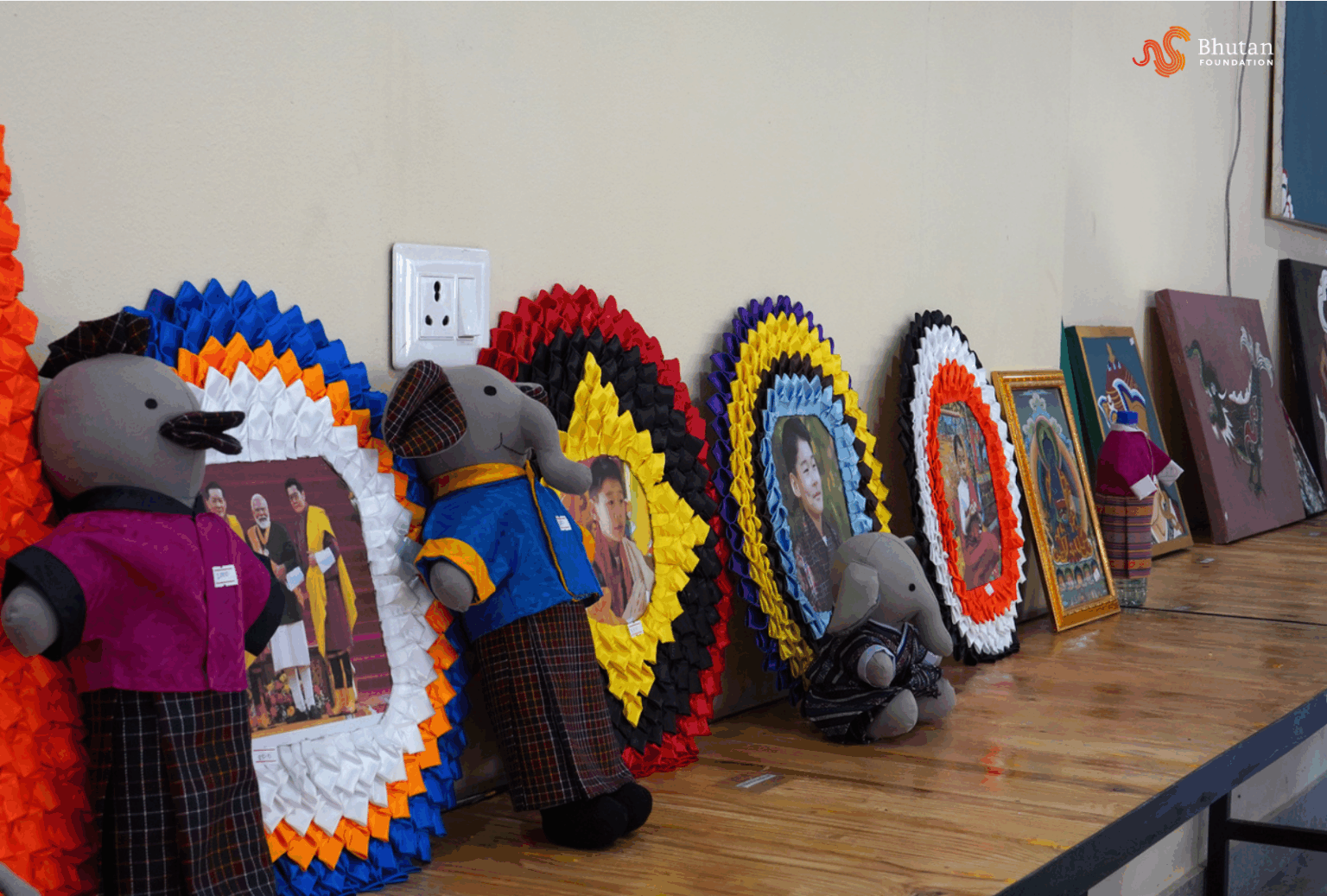
“People in the community have started noticing us,” she says with pride. “They see that we, persons with disabilities, are capable. We are not to be pitied; we are to be respected.”
Rupa Kafley, a 30-year-old woman from Chukha, had once envisioned a life built on ambition and service. After completing her Bachelor’s in Business Administration from Haryana, India, she was ready to shape her future with confidence. But fate had different plans. An accident fractured her legs and left her with a diagnosis of cerebral ataxia; a neurological condition that affects balance, coordination, and speech.
The accident was only the beginning of a long and painful journey. In 2021, Rupa lost her ability to speak altogether. Walking became a daily battle. Even more difficult was navigating a world that was unkind to people with disabilities.
She was undergoing treatment in India when the COVID-19 pandemic hit. Forced to return to Bhutan during the nationwide lockdown, Rupa had to stay with relatives in Thimphu; an experience that was emotionally challenging and left her feeling unsettled. Eventually, she returned to her sister’s home. When that, too, became unsustainable, she moved alone into the Toorsa Kidu housing, where she lived in isolation for nearly two years.
“People used to knock on my door and windows at night,” she recalls. “Once, someone even tried to force their way in. I was terrified.”
Outside, the world was no more forgiving. Using her walking frame, Rupa would go out to buy groceries, only to be met with stares, whispers, and cruel words. “People used to say I was no good anymore, that I had reached my last stage, and would die bedridden,” she says quietly.
Shunned, overlooked, and emotionally exhausted, Rupa felt invisible in her own country. She had lost not just her voice but her place in society.
But change arrived quietly, in the form of a woman named Pema Choki from RENEW Phuentsholing. Recognizing Rupa’s potential, Pema introduced her to the Federation of the Disabled (FITA). In 2023, the two organizations jointly conducted a 10-day handicraft training tailored for persons with disabilities. While the first round posed challenges, the organizers listened and learned. By 2024, they redesigned the training to cater better to diverse abilities, creating a safe and empowering space for participants like Rupa.
“The training wasn’t just about learning a skill,” says Rupa. “It was about rebuilding confidence and reconnecting with the world.”
Though she doesn’t yet fully support herself through handicraft making, the income she earns contributes to her independence. More importantly, the work gives her something she had long missed; a sense of community. “With this initiative, I meet people, interact, laugh, and share emotions. It has helped me recover physically and emotionally.”
Before her accident, Rupa had worked in the tourism industry at Crystal Bhutan Travels. Her life had been full of movement and ambition. Now, through the crafts she creates, she’s finding new purpose.
“People in the community have started noticing us,” she says with pride. “They see that we, persons with disabilities, are capable. We are not to be pitied; we are to be respected.”
Rupa’s story is not just one of survival, it is one of transformation. Through inclusive training and supportive networks, persons with disabilities are rewriting their narratives, one stitch, one product, and one shared story at a time.
“I feel happy when I’m creating,” he says with a quiet smile. “It’s not just about the money, I get to spend time with friends, learn something new, and feel proud of what I’ve made.”
At 25, Tandin Chedup Dorji from Kanglung, Trashigang, carries a quiet strength shaped by years of perseverance. Born seven months premature, Tandin has lived with a disability since birth, one that affects both his mobility and vision. Growing up, even simple movements like standing or walking required immense effort and constant support from his parents.
His family tried everything to help him gain independence. They took him for physiotherapy, sought medical treatments, and even consulted a Tibetan healer. Progress came slowly, but steadily. With time, Tandin began to walk, not easily, but with determination. For his family, every small step was a moment of triumph.
He attended school up to class six but had to drop out, not for lack of will or intelligence, but because the school environment wasn’t accessible for someone with his disability. After leaving school, Tandin spent most of his time at home, helping with small household chores and supporting his parents in whatever way he could.
Public spaces often reminded him of how society viewed difference. “People used to stare,” he recalls. “Sometimes I felt shy and uncomfortable. Traveling was difficult, and people didn’t always understand.” For years, he kept mostly to himself, until a new opportunity opened a door he didn’t know existed.
In December 2023, Tandin’s mother heard about a handicraft training program through RENEW and encouraged him to join. At first, he was hesitant. But the training turned out to be a turning point, one that gave him purpose, pride, and a renewed sense of belonging.
Through the program, he discovered a love for working with his hands. “I feel happy when I’m creating,” he says with a quiet smile. “It’s not just about the money, I get to spend time with friends, learn something new, and feel proud of what I’ve made.”
For the first time in years, Tandin began to see possibilities where once there were only limitations. His skill and commitment soon caught attention, and with the support of Dasho Dzongda, he received an opportunity to work as a paid intern at the Bhutan Chamber of Commerce & Industry (BCCI) in Phuentsholing. Alongside his work, he continues to create handicraft products, each piece reflecting patience, focus, and quiet determination.
To his fellow persons with disabilities, Tandin shares a message that comes from experience:
“Never give up. Keep pushing forward. There’s no such thing as ‘not being able to.’ We are capable, and we can do it.”
For Tandin, inclusion is simple, it means being seen, understood, and given a fair chance. He dreams of a future where persons with disabilities are valued for their abilities, not defined by their limitations. Through his work and his journey, Tandin hopes to inspire others, to show that with the right support and belief, everyone can rise and create their own path forward.
For me, inclusion is not complicated, it means being seen, being welcomed, and being given a fair chance to contribute.
At 22, Jigme Wangchuk from Tashiyangtse carries a quiet strength that shines through every challenge he has faced. Born with cerebral palsy, Jigme has lived with limited mobility and low vision since birth. Daily tasks that come easily to others have always required more effort from him, yet his calm spirit and steady determination have guided him forward.
He attended school up to class PP but found it difficult to continue due to challenges with hand movement. Later, he joined Draktsho, where he spent three years learning basic life and vocational skills. For Jigme, those years were not just about education, but about discovering what he could do and believing in himself.
His parents, especially his mother, Tshewang Yuden, have been his constant source of strength. Like many families’ navigating disability for the first time, they faced moments of uncertainty, social judgment, and emotional exhaustion. Yet through every challenge, their patience and love never wavered. “My parents always supported me,” Jigme says softly. “They never gave up on me.”
While Jigme did not face much direct discrimination, he saw how others like him were often excluded or overlooked. Those quiet observations shaped his understanding of what inclusion truly means, not pity or charity, but acceptance and opportunity.
In 2023, with encouragement from his mother, who works part-time with RENEW, Jigme joined a handicraft training program designed for persons with disabilities. It was here that he found a new passion; crafting. What began as an unfamiliar skill soon became a way for him to express creativity and connect with others. “It makes me happy,” he says with a gentle smile. “I feel content, like I’ve been given a chance.”
Among all the products he creates, home décor pieces, especially pearl flowers, are his favorite. The intricate, patient work suits his calm and thoughtful nature. Each creation reflects not just beauty, but resilience and care.
Jigme still lives with his family; his father works at the Telecom office. Until recently, he depended entirely on them. Now, with his newfound skills, he is beginning to earn a small income, and more importantly, a growing sense of independence and pride.
“Don’t leave persons with disabilities behind. Support us,” Jigme says simply.
For him, inclusion is not complicated, it means being seen, being welcomed, and being given a fair chance to contribute. Though he doesn’t yet know where this journey will lead, Jigme believes he is on the right path. With every handcrafted item he makes, he isn’t just decorating homes, he’s helping to
“She forgets her worries when she paints,” her teacher says. “She becomes someone new, someone confident, calm, and focused.”
In a quiet corner of Thimphu, inside the walls of Yangchen Gatshel Higher Secondary School, a small idea has grown into something life-changing. For years, children with disabilities, children who often struggled to express their emotions, communicate their needs, or feel understood sat quietly in classrooms where the world sometimes felt too loud, too fast, or too confusing. But three years ago, everything began to change when the school introduced a simple yet powerful skill: art.
“Art became their voice,” a teacher reflects softly. “For some of our children, colors speak louder than words ever could.”
The school serves students from many backgrounds, some from nearby police camps in Chamgang, some who lost parents, and others from shelters like RENEW. Their disabilities vary: ASD, ADHD, physical disabilities, learning challenges, emotional difficulties. Many are quiet. Many are sensitive. Many are lonely. And yet, each carries a story waiting to be told.
The first step toward this transformation began with curiosity. Teachers had visited other Inclusive schools and witnessed how art programs helped children express inner feelings. Inspired, they introduced two art classes a week. Resources were limited: only three rooms in total, one of which was a sensory room, and the classrooms were often overcrowded. Children with ADHD and ASD struggled with noise and distraction, and the teachers had to send restless students to the sensory room to calm down.
But despite every obstacle, the children kept showing up. And something unexpected happened, they bloomed.
There was a girl who often felt pushed away by others. She was sensitive, easily hurt, and quick to believe she didn’t belong. But when she stepped into the art room, all that changed. “She forgets her worries when she paints,” her teacher says. “She becomes someone new, someone confident, calm, and focused.”
Other children found healing in their own ways. Some said painting helped them forget their problems. Some said washing clothes eased their minds. Some found comfort in singing and dancing. Art wasn’t just a subject anymore it became therapy, expression, and escape.
In the early days, the school introduced a small club called Luwang Rigtshel, meant to explore not just painting but music and creative crafts. What began as a “baby step” soon turned into a space where children explored traditional Bhutanese patterns, colors, and techniques. Teachers encouraged them to dream big. “Do you know what you can become through art?” they asked, often showing videos of artists and entrepreneurs.
The turning point came when the school displayed its artwork at the Paralympic event and Entrepreneur’s Day. What started as a small experiment became a moment of pride. People admired the children’s work, staff bought pieces for their homes, strangers complimented the beauty and emotion behind each painting, and the children felt something they had rarely felt before: seen, valued, capable.
“For the first time,” a teacher recalls, “they realized their effort had meaning. That what they create with their hands could build their future.”
All the money earned from these sales is deposited into the school’s Inclusive Education account. Some of it goes back to the children as encouragement. Most is used to buy better materials, canvas, quality paints, brushes because the teachers know the children deserve tools that honor their effort. Many artworks take days, weeks, sometimes months. “If other artists put in 100 days of effort,” one teacher says, “our children put in 200.”
Today, the school dreams bigger. With support from DPOB and the Bhutan Foundation, a national platform is being created to showcase and sell products made by students with disabilities across Bhutan a long-awaited opportunity. If successful, Yangchen Gatshel hopes to build new vocational rooms, improve accessibility, strengthen sensory spaces, and even send children for advanced training. One day, they hope to open a small outlet inside the school or in the community where students can sell their products independently.
When asked what they want buyers to know, the teachers speak with emotion.
“Every piece of art carries a story. Our children pour their hearts into them, some pour their pain, some their dreams, some their longing to be understood. When you buy their art, you are not taking home a simple product. You are taking home a piece of courage.”
For the children of Yangchen Gatshel, art is more than creativity. It is a path toward independence, a way to regulate emotions, a space where they are not left out, and a future filled with possibilities. Through each brushstroke and color, they are crafting not just artwork, but self-worth and slowly painting a world where ability is celebrated, not dismissed.
Through repetition, texture, color, and form, the children expressed feelings they could not yet put into words. Slowly, trust began to grow not only toward caregivers and instructors, but inward, toward themselves.
At Halfway Home, healing does not arrive loudly. It settles in quietly through routine, patience, and the steady presence of caregivers who understand that trust, once broken, takes time to rebuild.
Within these walls live children whose early lives have been shaped by neglect, emotional and sexual abuse, abandonment, or conflict with the law. Some attend school and live here in boarding arrangements. Others have nowhere to return to after leaving institutional care. What they share is trauma, a heightened sensitivity to the world around them and a deep struggle to feel safe, to connect, and to express themselves.
“For many of them, trusting adults is very difficult,” says caregiver Nim Gyem, who has spent years walking alongside the children. “They have been hurt before. Safety is not something they feel easily.”
Over time, Nim Gyem and vocational instructor Tshewang Yuden came to realize that protection and shelter alone were not enough. “We could give them a place to stay,” Tshewang Yuden reflects, “but healing needed something more, something meaningful.”
With experience in mental health support and vocational training, they understood that the children needed ways to express emotions that words could not carry. They needed activities that engaged both their minds and their hands, allowing them to reconnect with themselves at their own pace.
That understanding led to the introduction of handicrafts, beginning simply as an engagement activity during school vacations. “At first, it was just to keep them occupied,” Tshewang Yuden recalls. “To divert their minds, give them something creative to do.”
But slowly, something changed.
As the children began weaving, making bouquets, producing ginger candy, learning tailoring skills, and nurturing a flower nursery, the activities took on deeper meaning. The program gradually evolved into a structured vocational initiative, one shaped not by pressure, but by choice.
“We never force them,” Tshewang Yuden explains. “We let them explore. Some are drawn to weaving, others to tailoring or gardening. When they choose for themselves, their confidence grows.”
This gentle, child-centered approach respected individuality, something many of the children had rarely experienced before. With each small success, confidence that had been worn down by past trauma began to return.
“When they create something with their own hands, you can see the change,” Nim Gyem says softly. “They become calmer. More focused. Emotionally grounded.”
Craft-making became a language of its own. Through repetition, texture, color, and form, the children expressed feelings they could not yet put into words. Slowly, trust began to grow not only toward caregivers and instructors, but inward, toward themselves.
That transformation deepened when the children saw their creations being sold. “They feel proud,” Tshewang Yuden shares. “They understand that their skills have value.”
All income generated from the sale of these handcrafted products flows directly back into Halfway Home, supporting school needs, rations, stationery, production materials, and other essentials based on need. In a shelter largely dependent on donations, this income makes a tangible difference.
“But more than the money,” Nim Gyem adds, “they realize they are not just receiving care. They are contributing.”
What makes these products special is not only their unique designs, but the stories they carry. Some items, especially religious products like the kuthang, hold deep meaning in a spiritual society, symbolizing healing, resilience, and hope.
“Every piece carries a journey,” Tshewang Yuden says. “When someone buys it, they are supporting much more than a craft.”
At Halfway Home, the hope is simple yet profound: through care, skill-building, and opportunity, every child can rediscover their potential and move forward with confidence. Handicrafts may seem small, but in the hands of these children, they become tools for healing, and a bridge toward a brighter future.
Every morning at Draktsho, the sound of scissors cutting fabric, sewing machines humming, and quiet conversations fills the room. For Dorji Wangmo and Girmoe, these sounds are more than routine, they are signs of growth, resilience, and dignity taking shape in small, determined hands.
“I am Dorji Wangmo,” she says gently, looking around the tailoring unit she has guided for over thirteen years. “I work with children with intellectual and multiple disabilities. They don’t learn at the same level, and they never have, but that doesn’t mean they cannot learn.”
Many of the children she works with come from difficult backgrounds. Some have faced family problems, others have grown up without consistent parental support. “Most of them doubt their own abilities when they come here,” Dorji Wangmo shares. “Their memory retention can be mild, moderate, or severe. They need time, more time than others, and constant reinforcement. Theory alone doesn’t work. We teach them practically, again and again, with patience.”
That patience, she explains, is what slowly builds confidence. “At first, they are afraid to try. But when they begin to complete even small tasks, you can see the change. They start believing in themselves.”
In another section of the production unit, Girmoe has been working closely with the children for the past five years. “Some of the students here are already groomed,” she explains, “but motivation grows when they see their work valued.”
For both instructors, handicrafts are not just skills, they are tools for emotional and social healing. Dorji Wangmo notices how creating something tangible helps the children regulate their emotions. “When they are working with their hands, they feel calm. They focus. They feel proud. We also provide staff counselling because emotional support is just as important as skill training.”
The idea of teaching handicrafts at Draktsho began as far back as 2001, rooted in a simple but powerful goal: to bring children with disabilities out of isolation. “We wanted them to come out of their homes,” Dorji Wangmo recalls, “to explore life, to become independent.” Today, some former students are even running their own small businesses, a testament to what long-term support can achieve.
Finding each child’s strength is a careful process. “We teach all students the small tasks first,” Dorji Wangmo explains. “Then we observe what they enjoy, what they can do well. It takes time and patience, but every child has something they are good at.”
That discovery becomes especially meaningful when the products are sold. “They are very happy,” Girmoe smiles. “When tourists or hotels buy their handmade products, the children feel motivated. They feel seen.” The diversity of products they create only strengthens that sense of achievement.
The income generated doesn’t disappear, it comes back to the children. “The proceeds go towards raw materials, skill enhancement, and even salaries for some children with disabilities,” Dorji Wangmo explains. “It supports their development directly.”
Both instructors share a common message for buyers. “These are not just products,” Dorji Wangmo says earnestly. “Every child here has worked hard and trained successfully. When you buy these items, you are supporting their growth.”
Girmoe adds, “Children with disabilities cannot go around selling their products. We don’t have many places to sell. When people buy from us, they help us continue the production unit and enhance their skills.”
At Draktsho, hope is stitched into every fabric, carved into every handcrafted piece. Through patience, belief, and opportunity, children who once doubted themselves are learning something powerful.
“Sometimes I lose hope,” she says honestly. “But this work supports me. It shows that I can stand on my own. It is an answer to all those people who doubted my abilities”
The sound of sewing machines fills the small space at Phuenzhi Tailoring in Babesa, Thimphu. To many, it is just the rhythm of work. But to Leki Lhadon and Passang Dema, it is the sound of independence, of lives slowly but firmly stitched back together.
Leki, 26, lives with cerebral palsy that affects her hands and speech. For years, speaking up was difficult, not just because of her impairment, but because people often spoke about her, not with her.
“It is hard for me to talk with people,” she says. “When I couldn’t do things at the same level as others, they called me youngmin. That stays with you forever.”
Passang, 35, from Zhemgang, understands that feeling well. With a physical disability affecting her legs, daily labour was painful and exhausting. Still, she worked in the fields and carried firewood, because there were few choices.
“People questioned my ability,” she recalls. “They made me feel like I could not do anything on my own.”
For both women, the hardest struggle was not only physical, it was emotional. The constant doubt from society slowly seeps in.
“Before, I couldn’t accept myself,” Leki admits quietly. “When people don’t believe in you, you start believing them.”
In 2019, Leki worked in a private office that claimed to employ persons with disabilities. When others received salary increments and she did not, she questioned it.
“They raised everyone’s salary except mine, even though I was working equally and sometimes much more compared to others. I asked why. There was no answer,” she says.
“That’s when I thought, maybe I need to create my own path.”
Around the same time, Passang heard about a tailoring training through village colleagues. She was unsure, but determined. “I asked myself, ‘Can I really do this?’” she says. “But I wanted to be independent. I wanted to take care of my daughter with dignity.”
Through training supported by the Ministry of Labour and DPOB, both women found their way to tailoring. The beginning was not easy. There were mistakes, slow progress, and familiar voices of doubt.
“Some people said my products would not come out good,” Leki shares. “They asked if I really made them. They didn’t trust my skills.”
Passang faced similar comments. “Even after I got the machine, people said it wouldn’t succeed,” she says.” But I kept practicing.”
Slowly, stitch by stitch, confidence grew. “When I create something with my hands, I feel proud,” Passang smiles. “Now I don’t have to ask anyone even for Nu. 5.”
For Leki, selling her products became more than a livelihood, it became proof. “Sometimes I lose hope,” she says honestly. “But this work supports me. It shows that I can stand on my own. It is an answer to all those people who doubted my abilities”
Today, both women earn through their skills. Where once they depended on parents, organisations, or uncertain work, they now depend on themselves.
“Please support our products,” Passang says. “This is how people will know that persons with disabilities are capable, just like anyone else.”
Leki nods in agreement. “I want my own brand,” she says. “And one day, I want to train other persons with disabilities in tailoring and marketing.”
The thought of losing this opportunity is frightening, not just because of income, but because of what it represents. “If this work stops,” Sangay admits, “it feels like my independence would stop too.”
Inside a small rented house in Punakha, the gentle rhythm of sewing machines fills the room. The space is modest, but it carries something powerful, determination stitched into every seam. This is where Yuru Zangmo, 37 and Sangay Om, 20 work side by side, building lives shaped not by pity, but by perseverance.
Yuru moves carefully, each step deliberate. A stroke left the left side of her body weakened, and on some days, even walking demands effort. “On rainy days, it becomes harder,” she says softly. “Even walking can be a challenge.”
Raised by a single parent, Yuru learned early that survival required strength. Relatives helped when they could, but the desire to stand independently never left her. “I didn’t want to depend on others forever,” she shares. “I wanted to be able to take care of myself.”
Her turning point came in 2003, when she joined a tailoring training for persons with disabilities. “I don’t remember the name of the organization,” she smiles, “but I remember how it made me feel. For the first time, I felt I had a skill, something that could shape my future.”
Since then, the sewing machine has been more than a tool. It has become a companion. “When I sew, I feel capable,” Yuru says. “I know I can do something meaningful.”
Sharing that same space, and that same belief, is Sangay Om, just 20 years old, from Chhukha. Born with a cleft lip, she grew up under curious stares and difficult questions.
“Sometimes children would ask questions, and I didn’t know what to say,” she recalls quietly.
“Even with friends, I sometimes felt invisible.”
Yet Sangay chose not to let those moments define her. After completing Class 10 in 2022, she took her first steps toward independence by working in a private tailoring shop. “I wanted to learn,” she says simply. “I wanted to stand on my own.”
Her journey led her to a specialized tailoring program for persons with disabilities, and eventually to Punakha Tailoring, where she now lives and works alongside Yuru.
“Now, I don’t have to depend on my family for my daily needs,” Sangay says with pride.
“I may not be able to send money home yet, but I know I am moving forward.”
For both women, tailoring is not just work, it is survival. “Please support us,” Yuru says earnestly.
“This is our only way of livelihood.”
The thought of losing this opportunity is frightening, not just because of income, but because of what it represents. “If this work stops,” Sangay admits, “it feels like my independence would stop too.”
Despite the uncertainty, hope remains strong. Yuru dreams of opening her own tailoring shop one day. “If I am in a better position,” she says, “I want to teach others like me.”
Their days are not free from hardship. There are physical limitations, moments of fatigue, and quiet worries about the future. But there is also pride, woven into every product they create.
Yuru and Sangay stitch not only threads, but belief; belief that with opportunity, patience, and support, vulnerability can be transformed into strength. And as the sewing machines continue their steady hum, so do their lives, moving forward, one stitch at a time.
Copyright @2025 Disabled People’s Organization of Bhutan-DPOB.
Design by Wangyel Studio
Disabled People's Organization of Bhutan
We firmly believe that the internet should be available and accessible to anyone, and are committed to providing a website that is accessible to the widest possible audience, regardless of circumstance and ability.
To fulfill this, we aim to adhere as strictly as possible to the World Wide Web Consortium’s (W3C) Web Content Accessibility Guidelines 2.1 (WCAG 2.1) at the AA level. These guidelines explain how to make web content accessible to people with a wide array of disabilities. Complying with those guidelines helps us ensure that the website is accessible to all people: blind people, people with motor impairments, visual impairment, cognitive disabilities, and more.
This website utilizes various technologies that are meant to make it as accessible as possible at all times. We utilize an accessibility interface that allows persons with specific disabilities to adjust the website’s UI (user interface) and design it to their personal needs.
Additionally, the website utilizes an AI-based application that runs in the background and optimizes its accessibility level constantly. This application remediates the website’s HTML, adapts Its functionality and behavior for screen-readers used by the blind users, and for keyboard functions used by individuals with motor impairments.
If you’ve found a malfunction or have ideas for improvement, we’ll be happy to hear from you. You can reach out to the website’s operators by using the following email
Our website implements the ARIA attributes (Accessible Rich Internet Applications) technique, alongside various different behavioral changes, to ensure blind users visiting with screen-readers are able to read, comprehend, and enjoy the website’s functions. As soon as a user with a screen-reader enters your site, they immediately receive a prompt to enter the Screen-Reader Profile so they can browse and operate your site effectively. Here’s how our website covers some of the most important screen-reader requirements, alongside console screenshots of code examples:
Screen-reader optimization: we run a background process that learns the website’s components from top to bottom, to ensure ongoing compliance even when updating the website. In this process, we provide screen-readers with meaningful data using the ARIA set of attributes. For example, we provide accurate form labels; descriptions for actionable icons (social media icons, search icons, cart icons, etc.); validation guidance for form inputs; element roles such as buttons, menus, modal dialogues (popups), and others. Additionally, the background process scans all the website’s images and provides an accurate and meaningful image-object-recognition-based description as an ALT (alternate text) tag for images that are not described. It will also extract texts that are embedded within the image, using an OCR (optical character recognition) technology. To turn on screen-reader adjustments at any time, users need only to press the Alt+1 keyboard combination. Screen-reader users also get automatic announcements to turn the Screen-reader mode on as soon as they enter the website.
These adjustments are compatible with all popular screen readers, including JAWS and NVDA.
Keyboard navigation optimization: The background process also adjusts the website’s HTML, and adds various behaviors using JavaScript code to make the website operable by the keyboard. This includes the ability to navigate the website using the Tab and Shift+Tab keys, operate dropdowns with the arrow keys, close them with Esc, trigger buttons and links using the Enter key, navigate between radio and checkbox elements using the arrow keys, and fill them in with the Spacebar or Enter key.Additionally, keyboard users will find quick-navigation and content-skip menus, available at any time by clicking Alt+1, or as the first elements of the site while navigating with the keyboard. The background process also handles triggered popups by moving the keyboard focus towards them as soon as they appear, and not allow the focus drift outside it.
Users can also use shortcuts such as “M” (menus), “H” (headings), “F” (forms), “B” (buttons), and “G” (graphics) to jump to specific elements.
We aim to support the widest array of browsers and assistive technologies as possible, so our users can choose the best fitting tools for them, with as few limitations as possible. Therefore, we have worked very hard to be able to support all major systems that comprise over 95% of the user market share including Google Chrome, Mozilla Firefox, Apple Safari, Opera and Microsoft Edge, JAWS and NVDA (screen readers).
Despite our very best efforts to allow anybody to adjust the website to their needs. There may still be pages or sections that are not fully accessible, are in the process of becoming accessible, or are lacking an adequate technological solution to make them accessible. Still, we are continually improving our accessibility, adding, updating and improving its options and features, and developing and adopting new technologies. All this is meant to reach the optimal level of accessibility, following technological advancements. For any assistance, please reach out to
Sign up today and stay connected with Disabled People’s Organization of Bhutan.